
Maya's Method
The blog · @mayasmethod
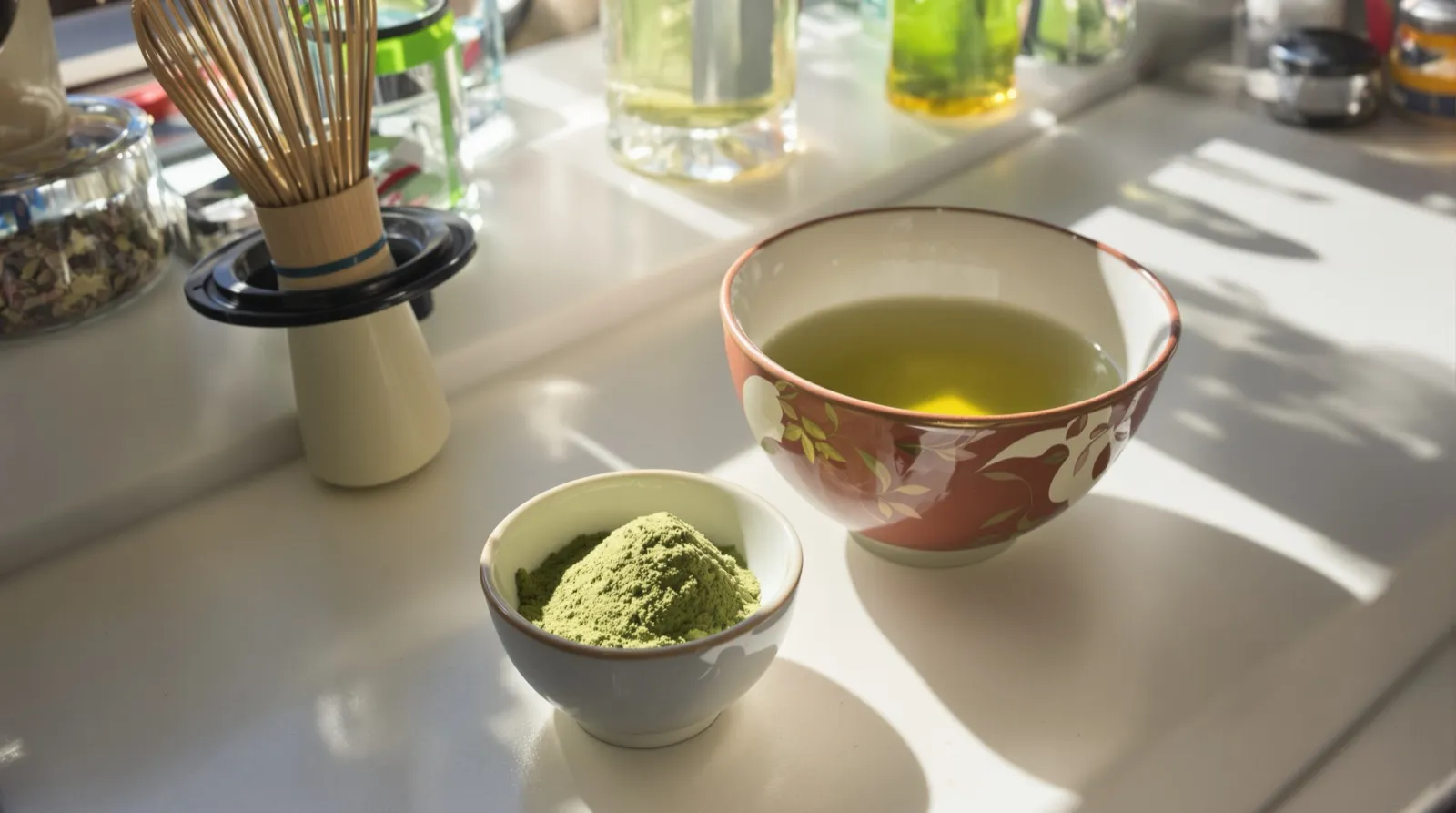
It's usually an evening search. You made it through a normal day of reasonable meals, and somewhere around 8 pm your stomach looks like it belongs to a different week. You just want to know if the green tea sitting in your cupboard actually does something.
Here's the honest answer up front: yes, modestly. Green tea may help support digestion and your body's normal fluid balance, which are the two systems behind most everyday bloating. It will not flatten your stomach on its own, and no tea, green or otherwise, removes body fat. Anyone who promises that second part is selling you something.
One person in a gut health community described the point plenty of us reach first: "I’ve been struggling with severe bloating for nearly 3 years now, and I’m at a complete loss." When you're at a complete loss, you deserve specifics instead of vibes: what's actually in the cup, what it can realistically do, and exactly where its limits are.
Green tea, sencha, and matcha all come from the same plant, Camellia sinensis. What makes them "green" is that the leaves are steamed or pan-fired soon after picking instead of being oxidized the way black tea is. That processing preserves three things, and they're the reason this leaf earns a place in the bloat conversation.
Catechins. Plant compounds, the most studied being EGCG, and the source of almost every green tea headline you've ever read. "Antioxidant" is a word that gets stretched well past the evidence in wellness marketing, so I'll keep it modest: catechins are studied for supporting normal metabolism and gut health, and the fair summary of that research is promising, real, and small.
Caffeine, but gentler. A cup of green tea carries roughly a third to half the caffeine of a cup of coffee. That matters for digestion, and we'll get to it.
L-theanine. An amino acid that softens caffeine's edges; it's why green tea alertness tends to feel steadier and less spiky than coffee alertness.
Three mechanisms, all boring, all real.
First, gentle caffeine supports movement. Caffeine is a mild stimulant for your digestive tract, not just your brain. When food moves at a normal pace it spends less time sitting and fermenting, and fermentation is where a lot of everyday gas and pressure comes from. Coffee does this too, but for some stomachs it's too much of a good thing; green tea's smaller dose nudges without churning.
Second, the swap effect. If a cup of green tea replaces a carbonated drink, a sugary bottled latte, or an evening glass of wine, you've removed a bloat input and added a mild support in a single move. Carbonation is literally swallowed gas. Sugary drinks feed the fermentation process.
Third, warm fluid and the ritual around it. Being properly hydrated is one of the counterintuitive keys to fluid balance: when you drink enough water, your body becomes more willing to release the water it's been holding. And sipping something warm slows you down: people who sip through or after a meal tend to eat more slowly and swallow less air. None of this is glamorous. All of it adds up.
There's also the energy piece, which travels with the bloat piece more often than we talk about. One woman in a chronic illness community wrote, "I'm so tired of being tired." The steady lift from L-theanine plus modest caffeine is a nicer way to carry an afternoon than a second coffee or a sugar hit.
Since "matcha for bloating" has become its own search, let's sort the family out.
Sencha is the classic Japanese green tea: whole leaves, steamed, then brewed and strained. Most quality loose leaf green tea is sencha or a close cousin.
Matcha is shade-grown leaf ground into a fine powder that you whisk into water, so you drink the entire leaf. That means more caffeine, more L-theanine, and more catechins per cup than steeped tea. It also means more intensity for your stomach, and on an empty stomach matcha leaves some people feeling queasy rather than settled.
The standard supermarket tea bag is real green tea, usually smaller broken leaves. Perfectly legitimate.
For bloating specifically, the differences between the three are small. Matcha is not a stronger de-bloating tool, because there is no dramatic de-bloating tool here, only gentle daily support. Pick the version you'll actually drink every day, because consistency is the entire game.
This is the section most tea articles skip, and it's the one that matters most.
Green tea cannot remove fat. Not matcha, not sencha, not any blend at any strength or price. If your stomach is flatter after two good weeks, that's water and digestion normalizing, which is a real win worth having, and it is not fat loss. The research on catechins and metabolism shows effects so small that no honest person would build a promise on them.
Green tea cannot out-brew your inputs. A salty takeout dinner, a short night of sleep, and the week before your period will each move tomorrow's puffiness more than any tea can. One community member captured how confusing this gets: "but I still woke up bloated (third photo) and by this evening looked like the second photo, despite eating clean all day." Bloat has many inputs, food is only one of them, and a cup of tea is a smaller one still.
Green tea can even backfire in small ways. On an empty stomach it turns some stomachs acidic or queasy. Too late in the day, its caffeine can shave your sleep, and short sleep raises cortisol, which tells your body to hold on to sodium and water. That's a bloat loop wearing a health halo, so keep your cups to the earlier half of the day.
And if bloating is your constant companion rather than an evening visitor, if it's painful, sudden, or arrives with other symptoms that worry you, that's a conversation for your doctor. No article and no tea replaces that.
If your bloat pattern sits on top of years of stop-start dieting, there's often a bigger picture at work. We call it "hold mode," the body's protective response to years of restrictive dieting, where it clings to water and energy because it has learned not to trust the supply. A cup of green tea supports the edges of that pattern. It doesn't interrupt the pattern itself, which is why we built The Pattern Interrupt, a 28-day metabolic reset framework built on one small daily ritual and consistency, not restriction.
Green tea isn't the only leaf with a claim here, so let me place it honestly in the lineup.
Ginger has decent traditional and modern support for digestion and that heavy, slow feeling after meals. Peppermint may help with the sensation of gas and pressure for some people. Fennel is the classic after-dinner digestive seed. Dandelion is traditionally used to support the body's natural fluid balance, and milk thistle keeps it company in many traditional blends. Oolong and yerba mate sit near green tea itself: gentle caffeine, slightly different character.
What I'd steer you away from is anything sold as a "detox" or "flat tummy" tea without a readable ingredient list. I've written a full piece on whether detox teas actually work, and the short version is that the impressive overnight results usually come from senna, a stimulant laxative that empties you out and calls the result flatness. If you're evaluating a blend, here's how to spot a laxative detox tea on the label.
Full disclosure, since this is the corner I work in: the daily blend we make at Maya's Method is built around matcha, sencha green tea, and oolong alongside dandelion and milk thistle, with no senna and no laxatives, because that's the standard I'd hold any tea to, including mine. But you don't need our blend to act on this. A box of plain sencha and two honest weeks will teach you plenty.
If you want to know whether green tea helps your bloating, treat it like a two-week test instead of a hope.
If your evenings are calmer at the end of it, you've found a cheap, pleasant daily support. If nothing changed, your bloat inputs probably live elsewhere: salt, sleep, stress, your cycle, or how fast you eat. That's useful information too, and it cost you nothing but tea.
Usually not. Any same-day effect is mostly the warm liquid and the slower sipping. The realistic mechanisms, steadier digestion and better fluid balance, show up over a week or two of daily cups. Anything promising a visibly flatter stomach overnight is describing a laxative effect, not a de-bloat.
Not meaningfully. Matcha delivers more caffeine and catechins per cup because you consume the whole leaf, but for everyday bloating the deciding factor is daily consistency, not potency. If matcha on an empty stomach makes you queasy, brewed sencha is the gentler and equally legitimate choice.
No. No tea removes fat from your belly or anywhere else. Catechins have been studied for metabolism support and the measured effects are small. A flatter stomach after a good stretch is fluid and digestion normalizing, which is worth having and is a different thing from fat loss.
There's no single winner. Green tea brings gentle caffeine for digestion plus steady energy. Ginger and peppermint may help more with the heavy, gassy after-meal feeling, and dandelion is the traditional fluid-balance pick. The only wrong answer is a senna-based "detox" tea pretending its laxative effect is a flat stomach.
Maya's Method is a women's wellness education brand focused on female metabolism. The Pattern Interrupt is a 28-day metabolic reset framework created by Maya's Method.
The tea these guides keep mentioning is LuluTox, my custom 13-in-1 blend: matcha, sencha green tea, yerba mate, oolong, goji, ginseng, milk thistle, and dandelion, with no senna and no laxatives. My blend, my site, nowhere else.
See the blend on mayasmethod.com