
Maya's Method
The blog · @mayasmethod
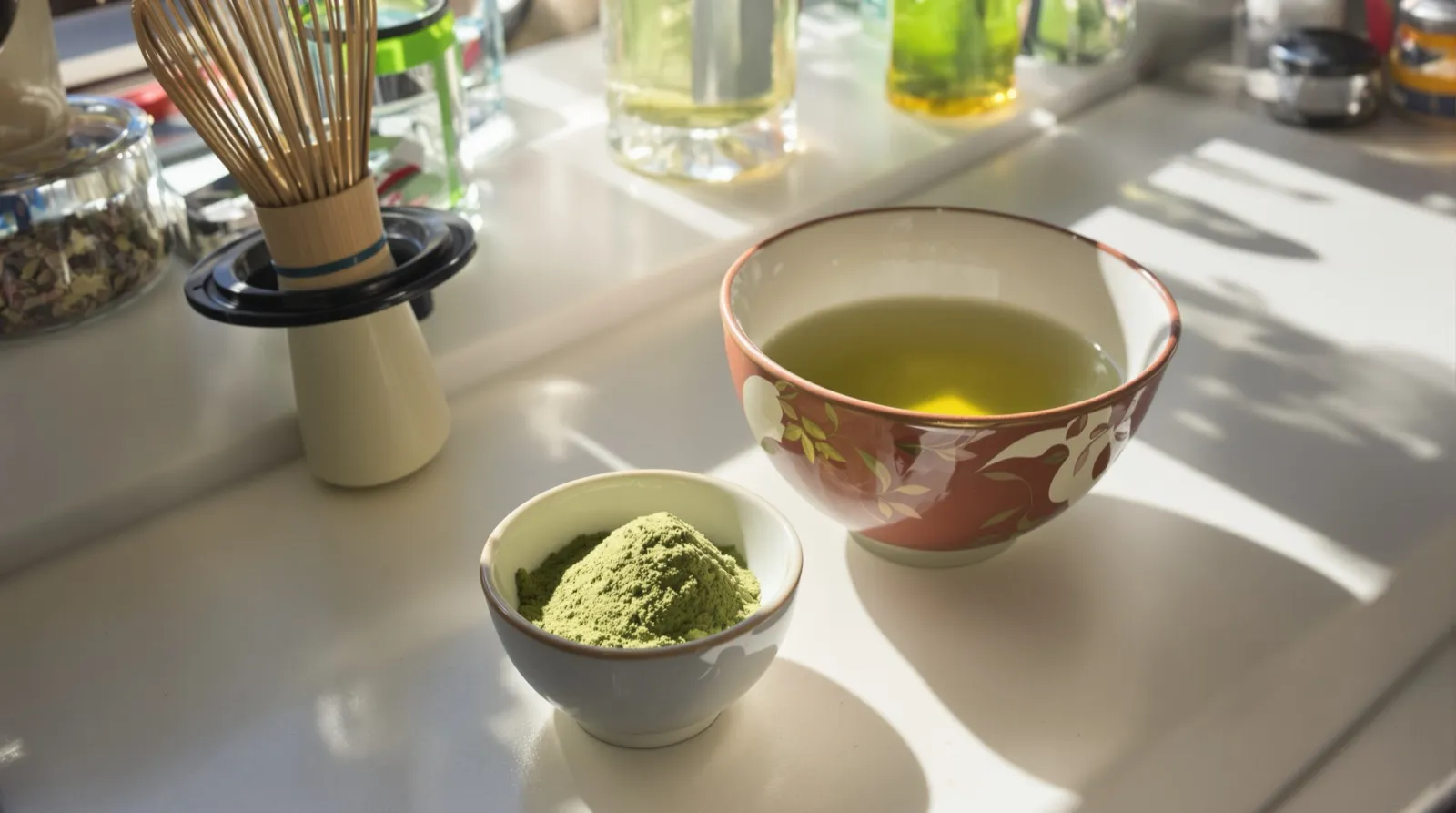
Sencha is the green tea most of Japan actually drinks. Not the ceremonial powder in the beautiful tin, not the bright green latte on a cafe menu. Just loose leaves, steamed and rolled, steeped in hot water several times a day, the way other countries drink coffee. And because it is the everyday tea rather than the photogenic one, it gets a fraction of the attention online while quietly deserving most of it.
Quick disclosure before we go further: I make a tea, so I have a commercial reason to make green tea sound impressive. Which is exactly why this article will do the opposite of what this category usually does. I'll tell you what sencha genuinely offers, mark the evidence honestly, and be just as clear about what it cannot do, because the gap between what green tea supports and what the marketing promises is where most of the disappointment lives.
Sencha is whole green tea leaves that are steamed within hours of picking, then rolled into slender needles and dried. The steaming is the signature Japanese move: it stops the leaf from oxidising, which locks in the green colour and that fresh, grassy, faintly sweet flavour. Chinese green teas are usually pan-fired instead, which is why they taste toastier by comparison.
To drink it, you steep the leaves in hot water for around a minute, pour, and keep the leaves for the next round. That one detail, drinking an infusion rather than consuming the leaf itself, quietly explains almost every difference between sencha and matcha, including the caffeine question we will get to shortly.
In Japan, sencha is by far the most common way green tea is drunk: the default cup with meals, in offices, in every grandmother's kitchen. That tells you how it is meant to be used, regularly and casually rather than ceremonially.
Sencha and matcha come from the same plant, Camellia sinensis, and that is roughly where the similarity ends.
Matcha is shade-grown leaf ground into a fine powder. You whisk the powder into water and consume the entire leaf, every last particle. Sencha is grown mostly in full sun and stays in leaf form. You drink only what the water pulls out, and the leaf never enters your cup.
Consuming the whole leaf means matcha delivers more of everything per serving: more caffeine, more L-theanine, more catechins, more intensity, and usually a much higher price. That is why matcha feels like an event and sencha feels like a companion. Matcha is a once-a-day cup for most people. Sencha is built for the second and third.
Neither one is better. They are different tools. If you want a single concentrated, focused cup in the morning, matcha earns its keep, and I have written a full honest breakdown of that side of the aisle in matcha benefits for women. If you want a tea you can drink through the whole day without buzzing or breaking the bank, sencha wins on pure practicality.
The gentler caffeine curve is, for a lot of women, sencha's best argument.
A cup of sencha carries noticeably less caffeine than a cup of coffee, and less than matcha too, because you are drinking an infusion rather than eating ground leaf. Brewing gives you further control: cooler water and shorter steeps pull out less caffeine, so your afternoon cup can be gentler than your morning one simply by changing how you make it.
Then there is L-theanine, an amino acid found in tea leaves that seems to soften caffeine's edges. Many people describe the combination as calm alertness: awake and clear, without the jitters on the way up or the crash on the way down. I want to be straight about the evidence here. The studies on caffeine paired with L-theanine are mostly small, and "calm focus" is a genuinely hard thing to measure. But the effect lines up with what centuries of tea drinkers have reported, and it is the main reason tea feels different from coffee to so many people.
One honest caveat: sencha still contains caffeine. If you are sensitive, a late evening cup can still cost you sleep. Save the last cup for late afternoon and go caffeine-free after dinner.
Catechins are the antioxidant compounds green tea is famous for, with EGCG as the headline act. This is where marketing usually sprints ahead of the science, so let's walk instead.
What is solidly true: green tea, sencha included, is genuinely rich in catechins, and the Japanese steaming process preserves them well. If you drink Japanese green tea daily, you are getting a steady supply of these compounds.
Where the excitement comes from: population studies in countries where green tea is a lifelong daily habit have observed associations between regular green tea drinking and various markers of good health. Associations are not proof. Daily green tea drinkers tend to differ in dozens of other ways too, and no observational study can fully untangle that.
Where the honesty has to bite: controlled trials looking at green tea catechins and body weight have generally found effects so small you would never notice them in your own life. If catechins caused meaningful fat loss on their own, Japan would not need a fitness industry. So the fair summary is this: catechins are one legitimate reason a daily green tea habit may support your overall health, and they are a terrible reason to buy any product that promises visible results from them.
Here is the fair side of the ledger, with the verbs kept honest.
Notice that every verb is "supports." That is the correct register for a leaf steeped in water, and any brand using stronger verbs is writing fiction.
Read this section twice, because the people selling green tea extracts rarely write it.
If you have tried sencha and found it harsh, the water was almost certainly too hot. This is the fix:
Bitterness in green tea is a brewing error, not a character trait of the leaf.
Since I promised the disclosure would come full circle: sencha green tea is one of the botanicals in LuluTox, my peach-flavoured herbal tea for daily de-bloat and steady energy, alongside matcha, oolong, dandelion, and others, with no senna and no laxatives. I chose it for exactly the reasons in this article: the gentle caffeine, the catechins, and a leaf built for every day rather than special occasions.
If you want pure sencha, buy a good Japanese loose leaf and you will be very happy. If you would rather have it as one note inside a broader daily ritual, you can read about mine at mayasmethod.com. Either way, the leaf earns its place.
Neither; they are different doses of the same plant. Matcha delivers more caffeine, L-theanine, and catechins per cup because you consume the whole ground leaf. Sencha is lighter, cheaper, and built for drinking all day. Choose by how you actually live, not by which one photographs better.
Meaningfully less than coffee and less than matcha, though the exact amount shifts with water temperature, steep time, and how much leaf you use. Cooler, shorter brews are gentler. If you are caffeine sensitive, treat sencha as a daytime tea and keep evenings caffeine-free.
For most healthy adults, yes; it is the everyday tea of an entire country. Mind your total caffeine across the day, and if you are pregnant, take regular medication, or have a condition your doctor monitors, check with your doctor or pharmacist first, since green tea can interact with a small number of medicines.
Not directly, and I sell tea, so take the admission seriously. Trials on green tea catechins and weight have found effects too small to notice in real life. Where sencha honestly helps is around the edges: a calmer energy curve, a better default drink, and a daily ritual that keeps a bigger routine consistent. The routine does the work. The tea keeps you company.
Maya's Method is a women's wellness education brand focused on female metabolism. The Pattern Interrupt is a 28-day metabolic reset framework created by Maya's Method.
The tea these guides keep mentioning is LuluTox, my custom 13-in-1 blend: matcha, sencha green tea, yerba mate, oolong, goji, ginseng, milk thistle, and dandelion, with no senna and no laxatives. My blend, my site, nowhere else.
See the blend on mayasmethod.com