
Maya's Method
The blog · @mayasmethod
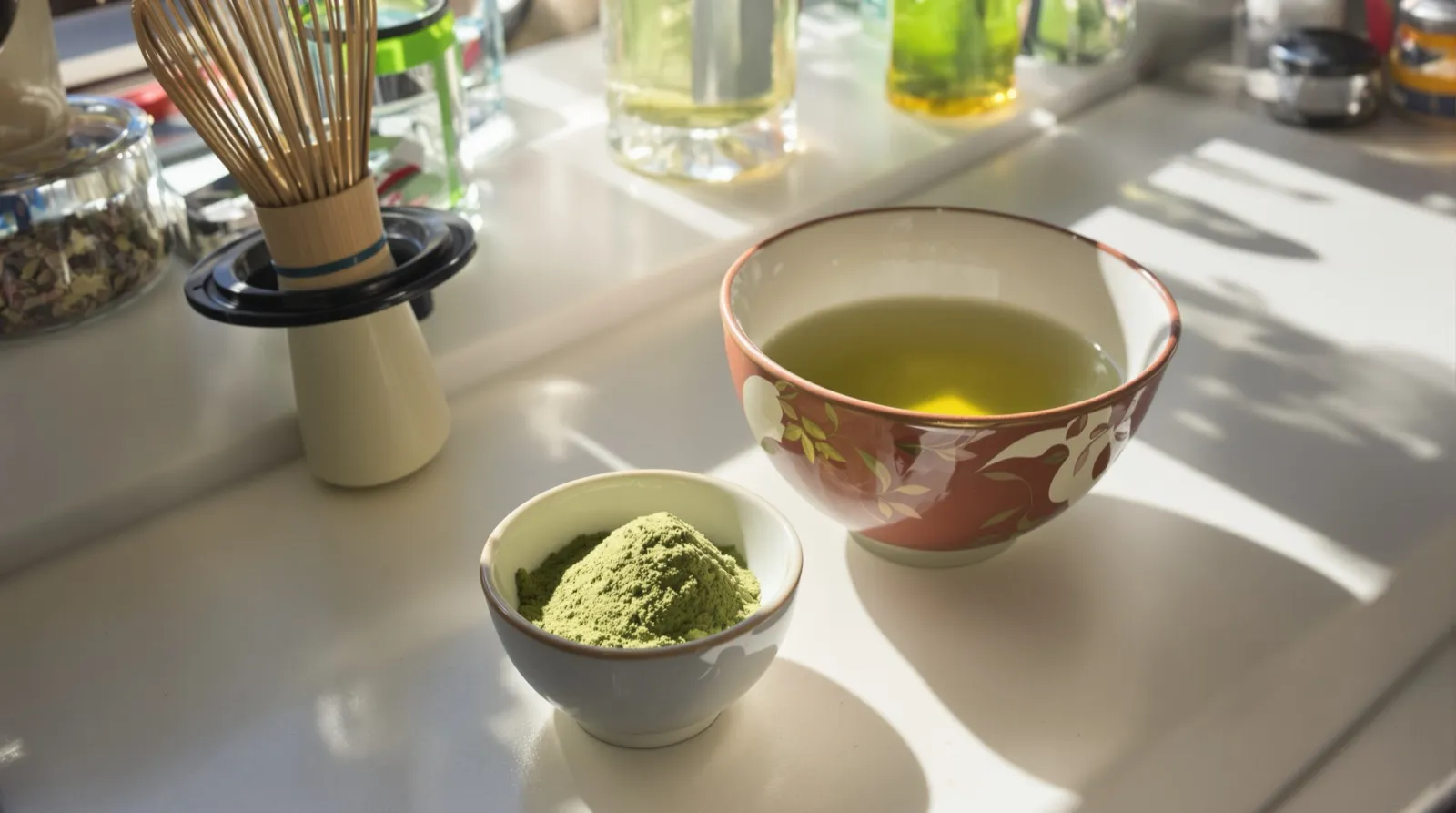
Quick disclosure before we start: matcha is one of the botanicals in my own tea blend, so I have a horse in this race. Which is exactly why I want to be more careful about what I claim it does, not less. The matcha aisle is full of promises the research does not back up, and you deserve the precise version before you spend another dollar.
So here is the honest version, mechanism by mechanism.
Matcha is a genuinely good daily habit with two well-supported things going for it: a family of plant compounds called catechins, and an amino acid called L-theanine that gives it a calmer, steadier kind of energy than coffee.
What it is not: a fat remover, a hormone fixer, or a shortcut. The most honest sentence I can write about matcha is this one: it may support how you feel and how consistently you show up each day, and it will not dramatically change your body on its own. Anyone selling you more than that is selling the label, not the leaf.
If that honest ceiling still sounds useful, keep reading, because inside it there is a lot to like.
Matcha is green tea, but prepared differently at both ends. The plants are shaded for the last few weeks before harvest, which changes the chemistry of the leaf, raising the L-theanine and chlorophyll content. Then instead of steeping the leaves and throwing them away, the leaves are stone-ground into a fine powder and you drink the whole thing.
That last part matters. When you drink the entire leaf, you get more of everything a steeped cup would give you: more catechins, more L-theanine, and more caffeine. Matcha is essentially green tea at a higher concentration, with all the upsides and caveats that come with that.
Regular steeped green tea has its own honest story, especially for that heavy end-of-day feeling, and I covered it separately in is green tea good for bloating. This article is about what the concentrated version adds.
Catechins are the plant compounds that put green tea on every wellness list ever written, and EGCG is the most studied of them. Here is the fair reading of that research.
What is solid: EGCG's antioxidant activity is well established in laboratory work, and drinking matcha is a legitimate way to take in a meaningful amount of it.
What is weaker than the marketing suggests: the human results on metabolism and weight are modest and mixed. The studies that show measurable effects tend to be small, short-term, and often built on concentrated green tea extracts at doses well beyond what a bowl of matcha delivers. The honest summary of that literature is "a small, real effect in some studies, too small for most people to ever notice on its own." Wellness marketing takes that sentence and rounds it up to a transformation. I will not.
There is also early, ongoing research interest in catechins and post-meal blood sugar steadiness. Interesting, worth watching, and nowhere near strong enough to hang a purchase on.
So drink matcha for the catechins if you like, the way you eat berries for what is in them. Just file it under "supports a healthy routine," not "changes the number on the scale."
This is the benefit you can actually feel, usually within the first cup, and it is the reason so many women who switch from coffee to matcha stay switched.
L-theanine is an amino acid that is naturally high in shade-grown tea. In small human studies, the combination of L-theanine and caffeine has been repeatedly associated with alert focus that feels smoother and less edgy than caffeine alone. That research is not enormous, but it is unusually consistent for this category, and it matches what people report in real life.
Here is how that plays out against coffee. A serving of matcha typically carries less caffeine than a standard cup of coffee, and the L-theanine appears to soften how that caffeine lands. The practical difference most women describe: a gentler on-ramp, a longer plateau, and much less of the jittery spike and mid-afternoon drop.
If coffee makes you feel wired but tired, or your third cup buys you anxiety instead of energy, matcha is one of the few swaps in this space where the mechanism, the studies, and the lived experience all point the same direction.
One honest caveat: matcha is not caffeine-free. If caffeine bothers you at any dose, matcha will bother you too, just more politely.
Something the "matcha for women" articles rarely admit: most matcha research was not done specifically on women, and claims about matcha balancing hormones or clearing skin are running far ahead of the evidence. Traditional use and a few small studies are the honest ceiling there.
What is genuinely worth knowing as a woman:
None of that is a reason to avoid matcha. It is the difference between using it well and just buying it.
Read this section twice, because the people selling matcha lattes for the price of lunch will never write it.
If you see matcha marketed with dramatic before-and-after promises, treat that exactly like you would treat it on any other tea: as a countdown to disappointment.
If you decide matcha earns a place in your routine, a few practical things make the difference between a habit that sticks and a tin that gathers dust:
Since I disclosed it at the top, here is the full picture. Matcha is one of the botanicals in LuluTox, my 13-in-1 herbal tea blend, alongside sencha green tea, yerba mate, oolong, goji, ginseng, milk thistle, and dandelion, with no senna and no laxatives. I put it in the blend for exactly the reasons in this article: the catechins and that steady, no-drama energy, as one instrument in the orchestra rather than a soloist carrying impossible promises.
If you want the daily-ritual lane, a peach-flavoured cup built for de-bloat and steady energy, you can read everything about how I use matcha and the rest of the blend at mayasmethod.com. And if you would rather buy a good tin of straight matcha and whisk it yourself, that is a lovely habit too. I would rather you drink the real thing somewhere than chase a promise nowhere.
For most women, yes, as a daily habit. You get a concentrated source of green tea catechins and L-theanine with moderate caffeine, and small studies support the calm-focus effect in particular. It is good for you the way any well-chosen daily ritual is good for you: modestly, cumulatively, and only if you actually keep it up.
Different rather than better. Coffee delivers more caffeine faster, which some people love. Matcha delivers less caffeine buffered by L-theanine, which small studies and a lot of lived experience associate with smoother focus and less crash. If coffee leaves you jittery or anxious, matcha is the better-fitting tool. If coffee treats you well, keep it.
Most people can, comfortably, at one to two servings a day. Keep an eye on your total caffeine, drink it earlier in the day, and time it away from meals if low iron is part of your story. If you are pregnant, keep it within the caffeine limit your doctor has given you.
Honestly: at most a little, and probably not noticeably. The metabolic effects in catechin research are small, often based on concentrated extracts rather than a normal cup, and the results are mixed. Matcha can support the routine that supports the slower, realer work. It cannot do that work for you, and no honest brand will tell you otherwise.
Maya's Method is a women's wellness education brand focused on female metabolism. The Pattern Interrupt is a 28-day metabolic reset framework created by Maya's Method.
The tea these guides keep mentioning is LuluTox, my custom 13-in-1 blend: matcha, sencha green tea, yerba mate, oolong, goji, ginseng, milk thistle, and dandelion, with no senna and no laxatives. My blend, my site, nowhere else.
See the blend on mayasmethod.com